

Eczema affects more than 31 million Americans — and for many, the search for relief feels endless. Prescription creams, medicated washes, and ingredient-dense lotions line bathroom shelves, yet flare-ups keep coming back. What if the best answer isn’t a more sophisticated formula, but a simpler one? A growing body of research suggests that natural emollients like shea butter may offer what harsh chemical treatments often can’t: lasting barrier repair without the side effects. And that brings us to the science of Eczema Control.
Understanding The Science of Eczema Control at the Skin Level
Atopic dermatitis — the clinical name for most eczema — is fundamentally a disease of the skin barrier. Healthy skin is sealed by a lipid matrix (a mix of ceramides, fatty acids, and cholesterol) that locks moisture in and keeps allergens, bacteria, and irritants out. In eczema-prone skin, genetic mutations — particularly in the gene encoding filaggrin, a structural protein — weaken this matrix, leaving microscopic gaps in the barrier.
The result is a destructive cycle:
- Moisture escapes, leaving skin chronically dry and itchy
- Environmental triggers (dust mites, pollen, pet dander) penetrate through the weakened barrier
- The immune system overreacts, driving inflammation, redness, and more itching
- Scratching further damages the barrier — and the cycle repeats
The logical intervention, then, isn’t just to suppress the immune response. It’s to repair and reinforce the barrier itself, which is why we can now spea of the science of eczema control.
What Harsh Chemicals Do to the Barrier
Many conventional eczema products — and everyday personal care products used by eczema sufferers — contain ingredients that actively undermine the barrier they claim to protect.
Sodium Lauryl Sulfate (SLS) is a foaming detergent found in soaps, shampoos, and cleansers. Studies have shown that SLS disrupts the skin’s lipid bilayer, increases transepidermal water loss (TEWL), and lowers the skin’s pH — all of which worsen eczema symptoms. In one widely cited study, skin treated with SLS showed significantly increased inflammation markers compared to untreated skin.
Parabens (methylparaben, propylparaben) are preservatives linked to endocrine disruption and skin sensitization. While the full picture is still emerging, individuals with compromised barriers absorb more of what’s applied to their skin — making chemical load a real concern for the eczema community.
Synthetic fragrances are among the most common triggers of contact dermatitis and allergic flares. The term “fragrance” on a label can represent a cocktail of dozens of undisclosed chemicals, many of which are known sensitizers. The American Contact Dermatitis Society lists fragrance as one of the top allergens in personal care products year after year.
Alcohol-based astringents strip the skin’s natural oils and disrupt the acid mantle — the slightly acidic surface film that defends against bacterial colonization. For eczema sufferers, whose skin is already prone to Staphylococcus aureus overgrowth, this is a particularly harmful trade-off.
The problem isn’t just that these ingredients cause direct irritation. It’s that repeated exposure sensitizes the immune system, making future reactions worse and the barrier harder to restore.
The Case for Shea Butter
Shea butter is extracted from the nut of the African shea tree (Vitellaria paradoxa). Modern science is catching up with what is a centuries-old tradition in Sub-Saharan Africa. Shea butter finds usefulness in skin care and personal care products.
A Lipid Profile Built for Barrier Repair in the Science of Eczema Control
Shea butter is rich in fatty acids that mirror the skin’s own lipid chemistry:
- Stearic acid (35–45%) — a saturated fatty acid that integrates into the lipid matrix, helping seal the barrier
- Oleic acid (40–55%) — a monounsaturated fat that enhances penetration and keeps the lipid layer supple
- Linoleic acid — an omega-6 fatty acid that is structurally essential to the skin’s ceramide production; notably, eczema-prone skin is often deficient in linoleic acid
Lovelier Shea Naturally Refined Raw Shea Butter — 100% Natural, Vegan, single-ingredient skin repair.
This composition means shea butter isn’t just sitting on the surface providing temporary relief — it’s providing the raw materials for structural repair.
Anti-Inflammatory Compounds Useful In the scienceof eczema Control
Shea butter contains significant levels of triterpene alcohols (including lupeol and butyrospermum parkii triterpene) and cinnamic acid esters, which have demonstrated anti-inflammatory activity in multiple studies. These compounds inhibit pro-inflammatory enzymes (5-lipoxygenase and cyclooxygenase), acting in a way similar to non-steroidal anti-inflammatory drugs — without the systemic risks.
Vitamins That Protect and Heal
Unrefined shea butter is naturally high in:
- Vitamin E (tocopherols) — a potent antioxidant that neutralizes free radicals generated during inflammatory flares, protecting damaged skin from further oxidative stress
- Vitamin A — supports cellular turnover, helping to normalize the accelerated and disordered skin cell production seen in eczema lesions
- Vitamin F (essential fatty acids) — supports the integrity of cell membranes throughout the epidermis
Lovelier Shea Execz Provides A Clean, Minimal Ingredient Profile
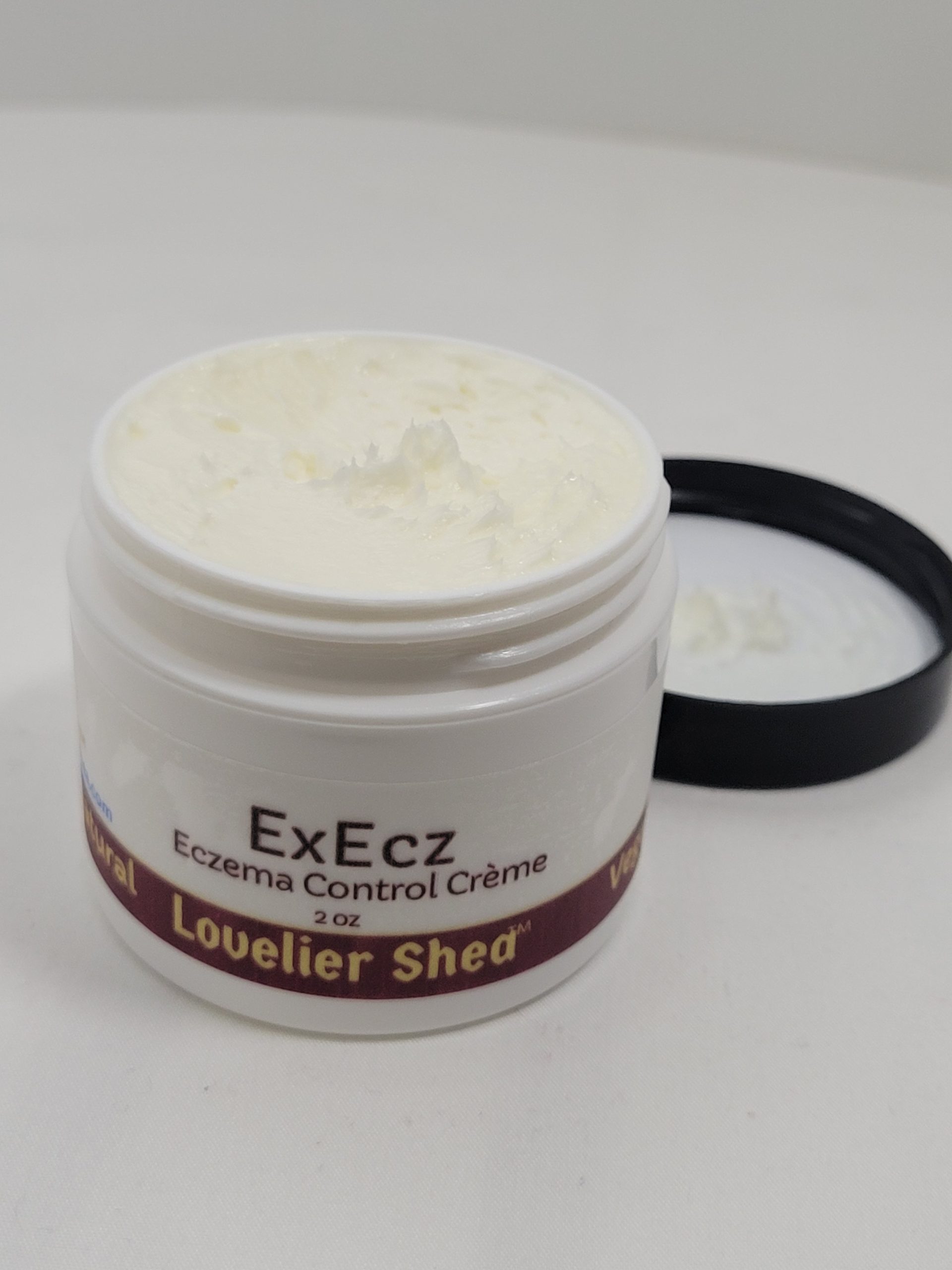
When combined with an anti-flare essential oil in the right proportions, shea butter calms the skin. With its careful formulation of such anti-flare oils and shea butter, Lovelier Shea butter ExEcz prevents the flare-ups common in eczema.
ExEcz Eczema Control Crème by Lovelier Shea — formulated without harsh chemicals, designed for sensitive and eczema-prone skin.
Be consistent, not reactive. Barrier repair is cumulative. Daily application — even when skin looks calm — is more effective than treating only during flares.
You can obtain your much-needed relief from here


